
Currentage Associates Office No. 6, Select One Plaza, Adjacent to Sindh Bank, F-11 Markaz, Islamabad
+92-334 5344 044
info@currentageassociates.com
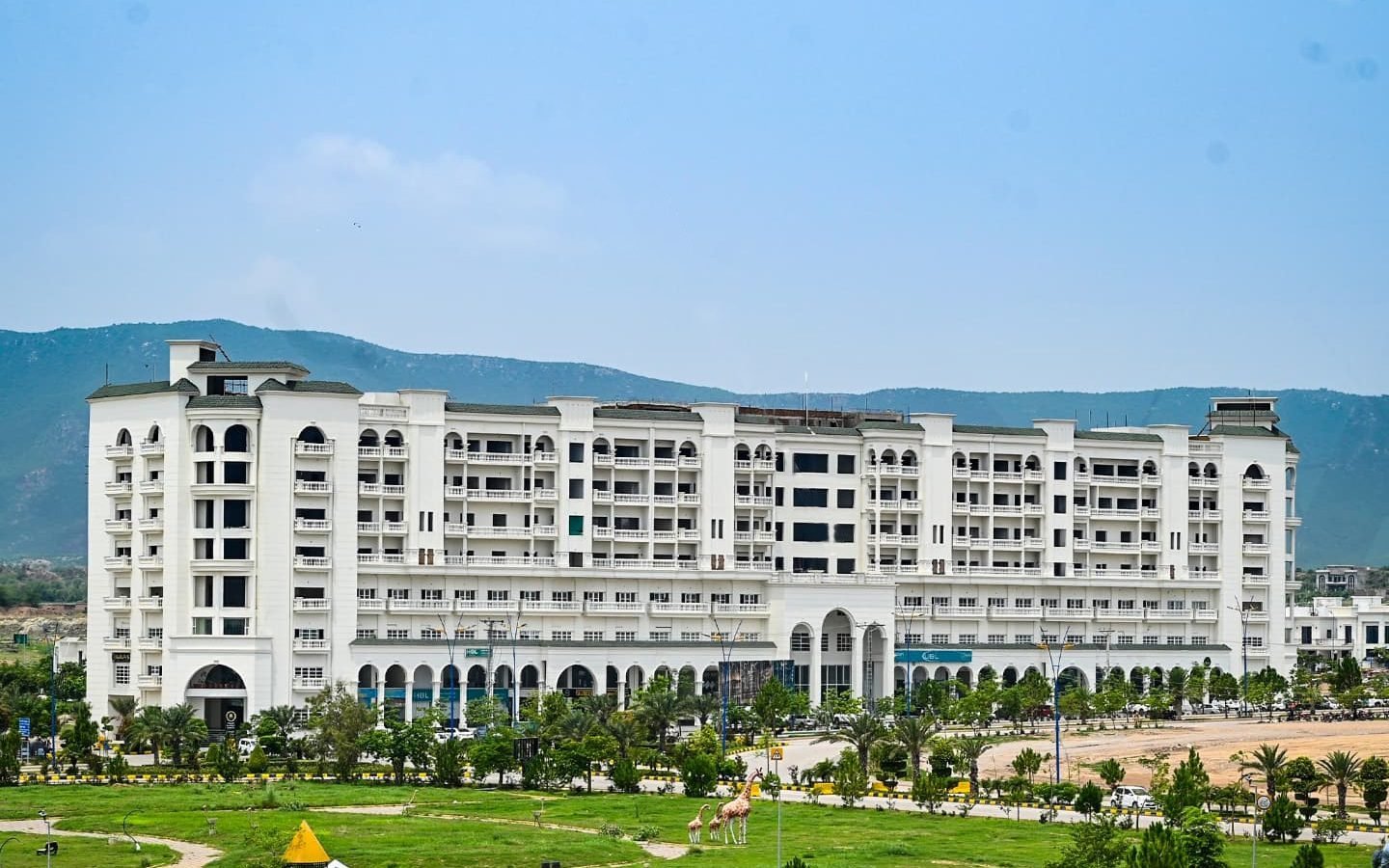
In Pakistan’s real estate market, most housing societies follow a familiar pattern. acquire land, divide it into plots, and develop infrastructure over time. Capital Smart City Islamabad breaks that pattern entirely.
This project isn’t just another addition to Islamabad’s outskirts, but it’s widely recognized as Pakistan’s first smart city, and one of the early large-scale attempts in the region to build a technology-driven urban ecosystem from the ground up.
What makes it stand out isn’t just branding. It’s the intent behind it.At a time when cities around the world are struggling with congestion, inefficient infrastructure, and environmental strain, the concept of planned, data-driven urban living is gaining traction. Capital Smart City positions itself right at the center of this shift—offering a model that aligns more with global urban development trends than traditional Pakistani housing schemes.In that sense, it’s less about selling plots and more about redefining how cities are built in Pakistan.
But to understand why this matters, it helps to step back and look at what a “smart city” actually is.
A smart city isn’t defined by flashy technology, but it’s defined by how effectively it uses data and infrastructure to improve everyday life.
At its core, a smart city integrates:
This can include everything from intelligent traffic systems and smart grids to water management and digital governance.
Globally, cities are moving toward this model because traditional urban planning simply can’t keep up with rapid population growth. Smart cities aim to anticipate problems instead of reacting to them.
Capital Smart City fits directly into this global movement. Instead of adapting old systems, it’s being designed with smart principles at its foundation, which puts it in a very different category compared to conventional developments.
And that naturally leads to the next question: who is actually executing this vision?
The long-term success of any master-planned community depends on the experience, financial strength, and vision of the organizations behind it. Capital Smart City stands out because it is backed by a strategic partnership between two of Pakistan’s most respected development companies, Future Development Holdings Pvt. Ltd. (FDHL) and Habib Rafiq Pvt. Ltd. (HRL). Together, these organizations combine decades of expertise in infrastructure development, engineering excellence, and modern urban planning to create one of Pakistan’s most ambitious smart city projects.
Future Development Holdings Pvt. Ltd. (FDHL) serves as the primary developer of Capital Smart City. The company specializes in developing innovative, master-planned communities that integrate modern infrastructure, sustainable development, and smart technologies. Rather than focusing solely on residential construction, FDHL emphasizes creating self-sustaining urban environments where residential, commercial, educational, healthcare, and recreational facilities coexist within a carefully planned ecosystem.
FDHL’s vision is to introduce international standards of urban development in Pakistan by incorporating intelligent infrastructure, efficient land utilization, environmental sustainability, and long-term asset management. This forward-looking approach has positioned Capital Smart City as one of the country’s leading smart city developments.
Habib Rafiq Pvt. Ltd. (HRL) is among Pakistan’s most experienced engineering, construction, and infrastructure companies, with a legacy spanning more than six decades. HRL has built a strong reputation by delivering major infrastructure and construction projects throughout Pakistan, ranging from motorways and highways to airports, bridges, housing societies, and complex engineering developments.
The company’s extensive expertise in project execution, engineering design, quality construction, and timely delivery provides Capital Smart City with a solid foundation for sustainable growth. HRL’s proven track record significantly enhances investor confidence, as buyers recognize that the project is being developed by an organization known for delivering complex infrastructure to international standards.
Adding further credibility to the project is its internationally recognized master planner, Surbana Jurong (Pvt) Ltd of Singapore. SJ is one of Asia’s leading urban planning and infrastructure consultancy firms, with experience in designing sustainable cities, industrial zones, transportation systems, and integrated developments across more than 30 countries. Its multidisciplinary approach focuses on creating communities that balance economic growth, environmental sustainability, transportation efficiency, and quality of life.
For Capital Smart City, Surbana Jurong has developed a comprehensive master plan that emphasizes:
This international planning expertise distinguishes Capital Smart City from conventional housing projects and aligns it with globally recognized smart city development principles.
The collaboration between FDHL, HRL, and Surbana Jurong reflects a vision that extends far beyond traditional real estate development. Rather than simply constructing residential plots and buildings, the partners aim to create an integrated urban ecosystem capable of supporting future generations.
Their shared objective is to develop a city that combines modern infrastructure, digital innovation, environmental responsibility, and economic opportunity within a single, well-connected community. From intelligent road networks and smart utilities to commercial districts, healthcare facilities, educational institutions, and recreational amenities, every aspect of Capital Smart City has been planned to support sustainable growth and an enhanced quality of life.
This combination of strong local execution, internationally recognized planning expertise, and long-term development strategy has established Capital Smart City as one of Pakistan’s most credible and future-focused real estate developments, offering both lifestyle benefits for residents and long-term value for investors.
What elevates the project further is the involvement of Surbana Jurong, a globally recognized urban planning firm. Their role is critical.
International planners bring:
In a market where planning quality can vary widely, this kind of global input adds a layer of credibility and future-readiness.
Even with strong developers and planners, navigating a project of this scale requires clear, reliable guidance, especially for investors. That’s where Currentage Associates comes in.
Positioned as a trusted investment consultant, Currentage Associates helps buyers:
In a complex project like Capital Smart City, that kind of clarity can make a real difference.
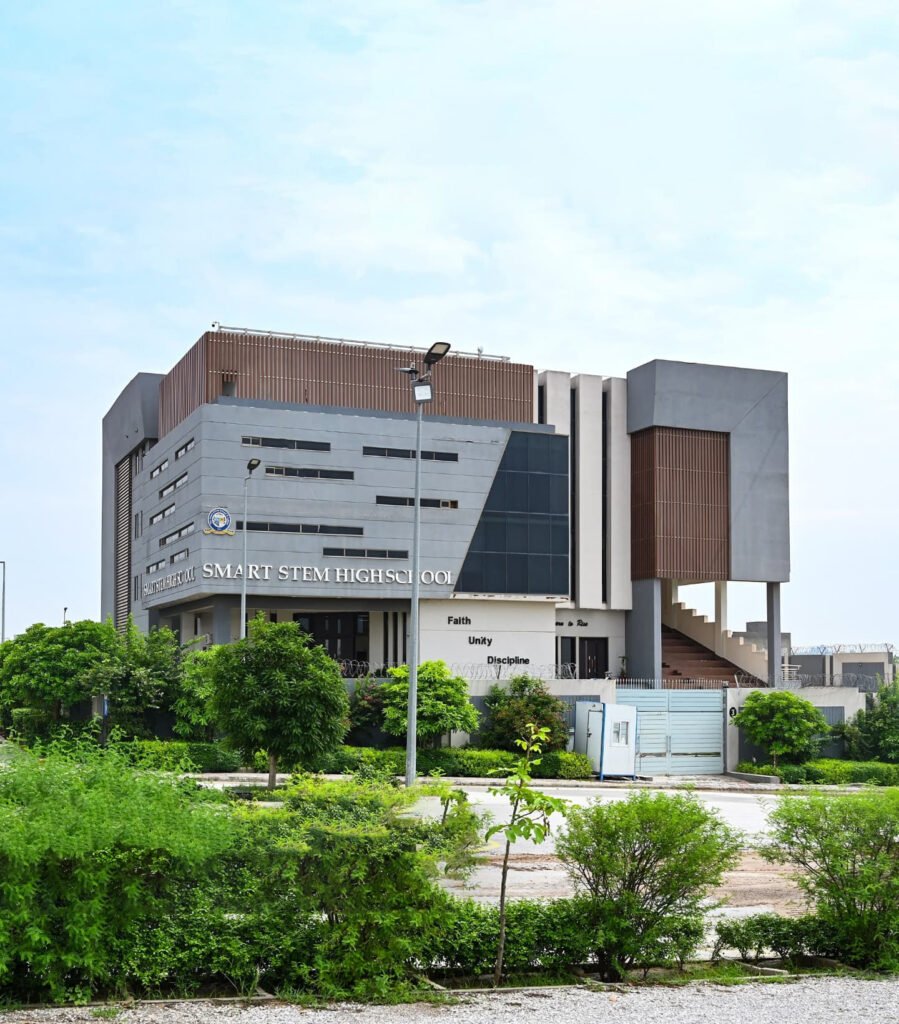
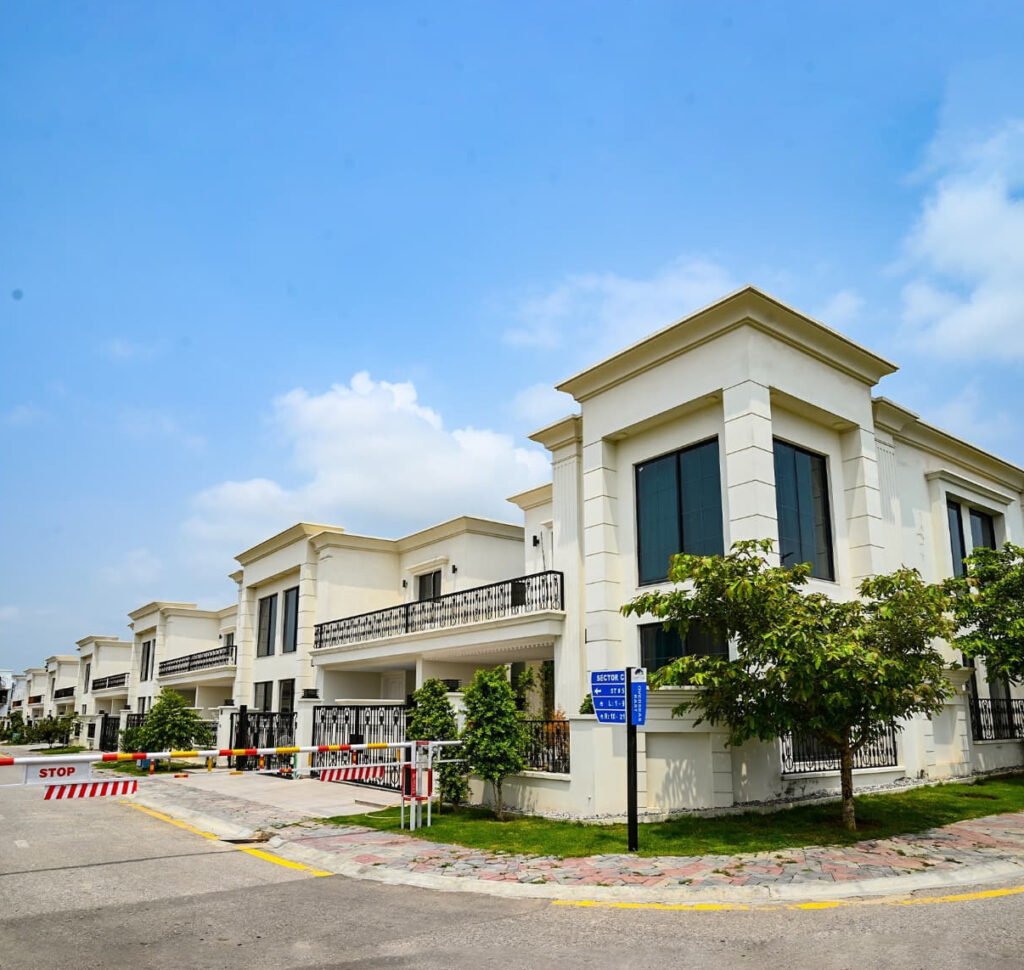
Location is always central to real estate, and Capital Smart City is positioned with long-term growth in mind.
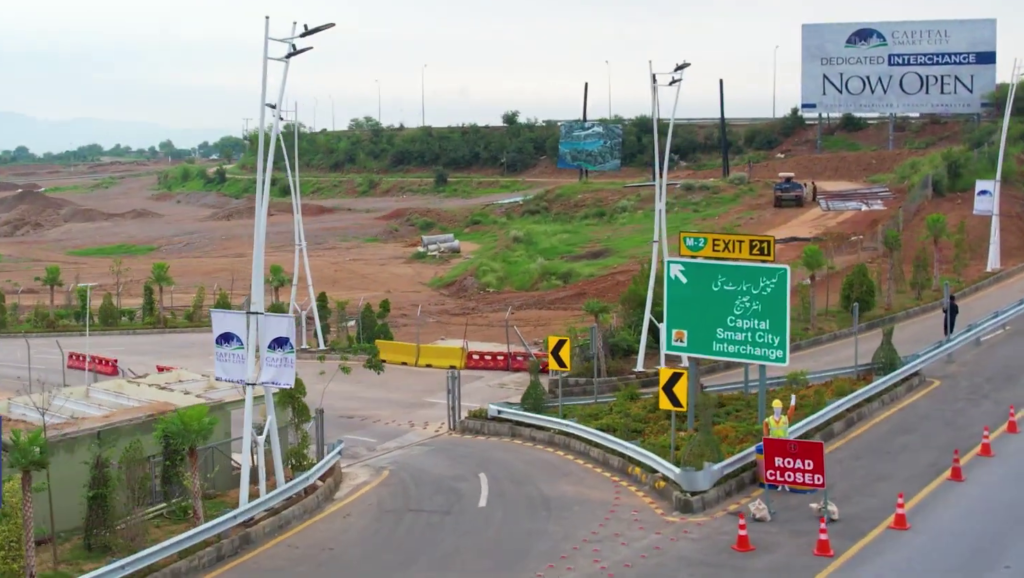
The project is located near the Islamabad International Airport, directly accessible from the M-2 Motorway.
Key access points include:
This positioning places the project at a junction of connectivity and future expansion.
The importance of this location goes beyond convenience.
Historically, areas near major transport hubs tend to see accelerated real estate appreciation. Capital Smart City is positioned to benefit from exactly that pattern.
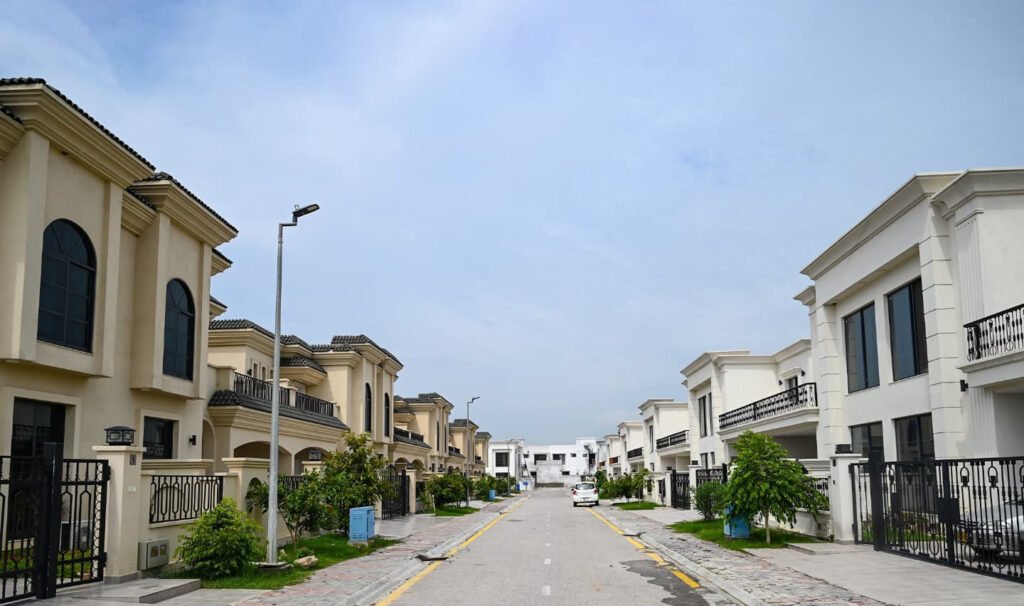
One of the defining aspects of Capital Smart City is its sheer scale.
Spread over 50,000+ kanals, the project is designed as a self-sustaining urban township rather than a conventional housing society.
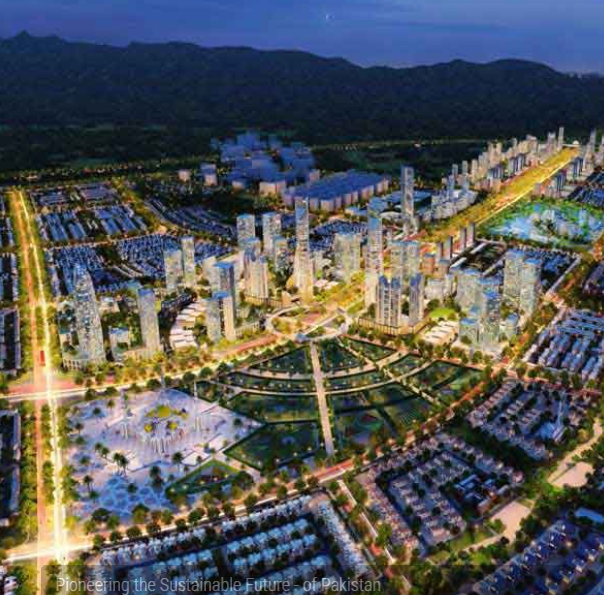
Instead of random expansion, it follows a district-based development model, where different zones serve specific functions, such as residential, commercial, recreational, and administrative.
This kind of planning allows for:
The project is divided into multiple districts and blocks, each with a distinct purpose:
This segmentation ensures that the project caters to different budgets and investment strategies without compromising overall planning quality.
What truly differentiates Capital Smart City Islamabad is how deeply smart systems are integrated into the infrastructure.
Some of the standout features include:
At the same time, the project emphasizes eco-friendly development, incorporating:
Beyond technology, the project is designed to support a complete lifestyle experience.
Residents can expect:
The mixed-use design ensures that people can live, work, and relax within the same environment, reducing reliance on long commutes and improving overall quality of life.
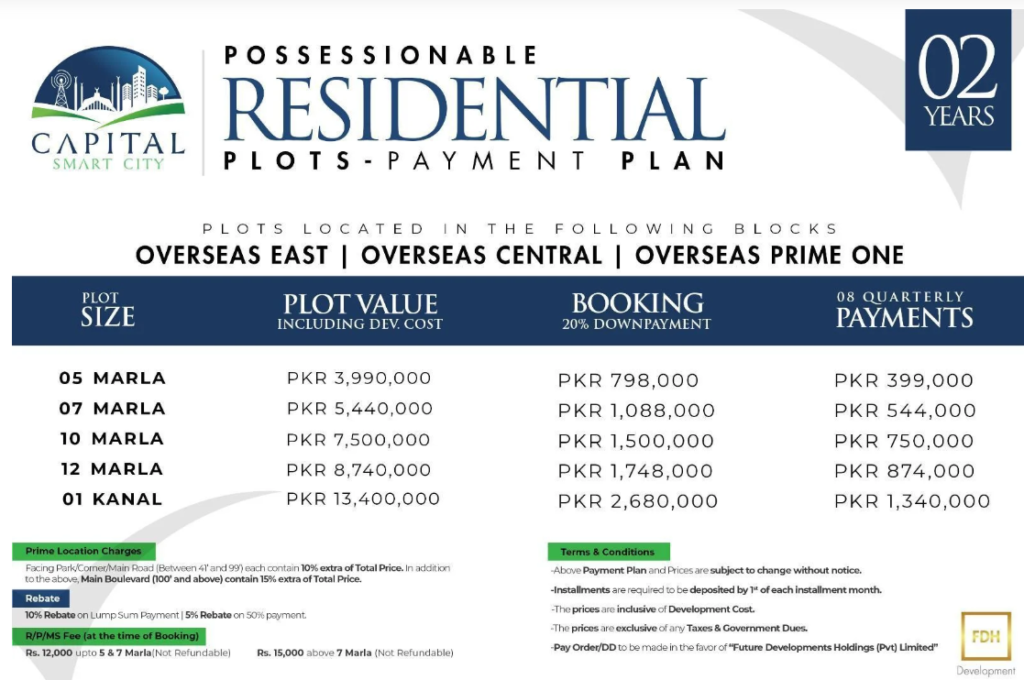
One of the reasons Capital Smart City Islamabad Payment Plan has attracted such a wide investor base is its structured and flexible payment model.
Instead of requiring heavy upfront capital, the project spreads the financial commitment in a manageable way:
This staggered structure allows investors to secure a position early while distributing the financial load over time, a strategy that works particularly well in projects with long-term appreciation potential.
Capital Smart City Islamabad offers a wide range of residential options, catering to both entry-level buyers and premium investors:
This range allows investors to align their purchase with both budget and strategy, rather than being forced into a one-size-fits-all option.

In Pakistan’s real estate market, legal clarity is often the difference between a secure investment and a risky one.
Capital Smart City Islamabad holds approval from the Rawalpindi Development Authority (RDA), which is a critical factor for investor confidence.
Additionally:
Why does this matter?
Because projects without clear approvals often face:
A project with proper regulatory backing offers greater security, smoother transactions, and stronger long-term trust.
When evaluating returns, it’s important to look beyond current prices and focus on what drives future value.
Capital Smart City benefits from several long-term growth factors:
As roads, utilities, and commercial zones develop, property values tend to rise in parallel.
Areas near major airports historically see increased demand due to accessibility and economic activity.
Connectivity enhances both residential desirability and commercial potential.
Over time, these factors create a compounding effect, where location, infrastructure, and demand reinforce each other, leading to sustained appreciation.
No serious investment discussion is complete without addressing the risks, and ignoring them doesn’t make them disappear. Some practical considerations include:
Projects of this scale require patience. Quick returns are possible, but not guaranteed.
Large developments often face delays due to approvals, infrastructure complexity, or market conditions.
Real estate prices can shift based on economic factors, policy changes, and demand cycles.
This is where informed decision-making becomes critical.
Working with experienced consultants like Currentage Associates helps reduce uncertainty. Instead of relying on speculation, investors gain:
In a market where information gaps can lead to costly mistakes, that kind of insight acts as a risk filter rather than just a sales pitch.
Living in Capital Smart City is designed to feel organized, predictable, and efficient, three things that are often missing in rapidly expanding cities.
Instead of dealing with unplanned congestion or inconsistent services, residents are meant to experience:
The community layout plays a big role here. Residential zones are carefully separated from high-traffic commercial areas, while green spaces are woven into everyday life. The result is a setting where daily routines feel less chaotic and more structured.
There’s also a subtle but important benefit: time savings. When everything, from schools to commercial areas, is planned within reach, daily life becomes more efficient.
It’s one thing to talk about “smart systems,” but it’s another to see how they actually affect daily life. In Capital Smart City, these systems are designed to quietly improve how the city functions:
The key here is that these systems aren’t meant to be visible, they’re meant to work in the background, making life smoother without constant intervention.
No investment exists in isolation. To make a real decision, buyers naturally compare options.
Defence Housing Authority Islamabad (DHA) represents stability and proven delivery.
In short:
Bahria Town is known for lifestyle-driven developments.
The difference is subtle but important. One emphasizes current livability, the other emphasizes future optimization.
Capital Smart City vs Conventional Societies
Traditional housing schemes often follow a slower, less structured approach:
Capital Smart City, by contrast, is designed as a complete ecosystem from day one.
What really sets it apart comes down to three factors:
Not every project fits every investor, and that’s a good thing.
Capital Smart City tends to align best with:
If someone is looking for immediate construction and ready-to-move-in conditions, other options may be more suitable. But for those thinking ahead, this project fits a growth-oriented strategy.
Looking forward, the trajectory of Capital Smart City is tied to a few key trends:
Combined with its proximity to Islamabad International Airport and major road networks, the project sits in a position where infrastructure and demand can reinforce each other over time.
At this stage, the biggest risk isn’t the project. It’s making the wrong move within the project. That’s where Currentage Associates plays a practical role. Instead of simply facilitating a purchase, they help investors:
In projects like Capital Smart City, these details matter. A well-timed, well-placed investment can outperform an average one by a significant margin.
Stripping away the marketing and looking at the fundamentals, Capital Smart City presents a compelling case, with some clear trade-offs.
Strengths:
Weaknesses:
Ideal Investor Profile:
This project makes the most sense for someone who:
In the end, Capital Smart City isn’t just another housing option. It’s part of a broader shift toward smarter, more structured urban living in Pakistan.
Lahore Smart City, another great project by the developers of Capital Smart City, takes the legacy to Punjab’s capital. Otherwise, you can check out our page on Faisal Town or its more popular Faisal Town Phase 2 for better investment opportunities.
It’s Pakistan’s first purpose-built smart city, designed with integrated technology, data-driven infrastructure, and sustainable planning. Unlike traditional societies, it focuses on long-term efficiency and modern urban living.
Yes, the project has received approval from the Rawalpindi Development Authority (RDA). This legal backing adds credibility and reduces risks often associated with unapproved developments.
It is located near the Islamabad International Airport and directly accessible from the M-2 Motorway, making it well-connected to both Islamabad and Rawalpindi.
The project offers residential plots ranging from 5 Marla to 2 Kanal, along with commercial plots in key business zones. It caters to both investors and future residents.
It can offer short-term gains during development phases, but it is generally better suited for medium- to long-term investment, where the full value of infrastructure and planning materializes.
The Overseas Block is designed specifically for overseas Pakistanis, offering enhanced security, premium planning, and reliable investment conditions, making it one of the most in-demand sectors.
Like any large project, there can be development delays and market fluctuations. However, strong developers and legal approval help mitigate many of these risks.
Its proximity to major routes and the airport increases accessibility and demand, which typically leads to stronger property value growth over time.
Construction depends on the development and possession status in specific blocks. Some sectors are closer to readiness, while others may require waiting for infrastructure completion.
They provide verified project insights, help you choose better plot locations, and guide you through the process, reducing risk and improving your overall investment decision.